
Retail inflation rose to a three-month high of 1.33 per cent in December 2025 mainly due to higher prices of kitchen essentials, including vegetables and protein-rich items.

'An asset must generate income. Equities yield dividends, bonds pay coupons, deposits give interest, and real estate earns rent.' 'Gold, silver, and even Bitcoin produce no income, they merely store value. So, they should not be compared to productive assets.'

'The CCI will first need to take a prima facie view on whether IndiGo's role warrants a detailed investigation.'

'In the long run, India's strong growth story and reforms to make assets globally attractive will determine the rupee's resilience.'

'New investors should enter gradually and stay cautious.' 'Silver is a structural multi-year story, but timing matters in a high-volatility metal.'

Sectoral funds, focused exclusively on public sector banks (PSBs), have delivered the strongest returns among domestic mutual fund (MF) categories over the past six months. However, active banking funds have significantly lagged because of their heavy tilt towards private lenders.

Equity mutual fund (MF) schemes were flush with cash at the start of this month, even as fresh investments shrank in February. As of February 28, equity schemes from the top 20 fund houses held 6.8 per cent of their portfolios in cash, up from 6.1 per cent in January and 5.9 per cent in December 2024, according to a report by Motilal Oswal Financial Services.

Overall economic activity continued to hold up in November with demand conditions remaining robust, thanks to strengthening urban demand, but manufacturing and rural demand showed some signs of deceleration even as services remained strong, according to an article on the State of the Economy written by Reserve Bank of India (RBI) officials in the central bank's December bulletin.
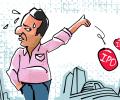
India's equity markets may have expanded rapidly, but initial public offerings (IPOs) are increasingly becoming exit vehicles for early investors rather than as engines for raising long-term capital, a shift that undermines the spirit of public markets, Chief Economic Advisor V Anantha Nageswaran warned on Monday at a CII event.

Mahindra & Mahindra, Bharti Airtel, Infosys, Tata Motors, Titan, Tata Consultancy Services, Nestle and Maruti were also among the major laggards. HDFC Bank emerged as the only gainer from the pack.

Mahindra & Mahindra on Tuesday posted a 28 per cent year-on-year increase in its consolidated profit after tax to Rs 3,673 crore for the second quarter ended September 30, 2025, driven by robust performance of the farm sector, while also seeing the impact of the GST transition on the auto sector. The company reported a profit after tax (PAT) of Rs 2,867 crore for the July-September period of the last fiscal.

The country's largest listed auto parts company by market capitalisation, Samvardhana Motherson International, reported a better than expected operating performance in the second quarter (July-September) of 2025-26 (Q2FY26). Though the global passenger vehicle (PV) market is facing multiple headwinds, the company is outperforming on the back of higher content per vehicle and market share gains.

India's manufacturing sector activity strengthened in October, buoyed by Goods and Services Tax relief, productivity gains and tech investment, even as international sales rose at a weaker pace, a monthly survey said on Monday.

Even if the Reserve Bank of India's Monetary Policy Committee decided to hold interest rates in the October meeting, it acknowledged the scope for further rate cuts while waiting for the impact of the past steps to play out.

Private sector banks slipped in market capitalisation (mcap) during the July-September quarter, underperforming their government-owned peers as trade uncertainties dragged market sentiment, said S&P Global Market Intelligence. According to its analysis, HDFC Bank shed 4.8 per cent in mcap during the third quarter, while ICICI Bank's dropped 6.7 per cent.

Sanjay Malhotra has made structural changes to banking regulation to bring down costs and increase efficiency. Plus, he kicked off a benign interest regime. But there are challenges ahead.

Cleaner balance sheets, regulatory support and strong growth prospects helped Indian private banks attract over $6 billion in foreign capital, with more deals expected in 2026.

India, the world's fourth largest economy, is set to maintain the 'goldilocks' phase with tailwinds of good growth, low inflation and robust banking performance as well as reform initiatives poised to sustain the economic pace witnessed during 2025.

Alternative Investment Funds (AIFs) with a lock-in period performed better than the ones that allow investors to withdraw capital at any time. Close-ended schemes had a median return of 5.62 per cent in December, according to data from industry tracker PMSBazaar. The median returns for open-ended schemes were 3.91 per cent

New Delhi will substantially reduce tariffs on industrial and agricultural goods while continuing to protect sensitive sectors. Tariffs on some agricultural products that are not traditionally considered sensitive will be brought down to zero, while in the case of relatively sensitive items, duties will be reduced in a graded manner and quotas will be imposed.

The Reserve Bank of India (RBI) has identified "climate shocks" as a risk to food inflation rates and overall price rise while stating that the outlook for the country's economic growth remains bright. In its Annual Report for 2023-24, released on Thursday, the central bank said easing supply-chain pressures, broad-based softening in core inflation, and early indications of an above-normal southwest monsoon meant well for the inflation outlook in 2024-25. "The increasing incidence of climate shocks, however, imparts considerable uncertainty to the food inflation and overall inflation outlook," said the RBI while noting headline inflation moderated by 1.3 percentage points on an annual average basis to 5.4 per cent in 2023-24.

Indian stock markets have experienced some ups and downs in the first half of 2025. However, both the Nifty 50 and Sensex saw steady gains, supported by a healthy economy and better corporate earnings. In this article, we will look at the detailed performance of these key indices and explore the sectors that drove the market rally.

Since the Indian government reduced GST on small cars on September 22, the small car segment's share in Maruti's overall sales has risen to more than 25 per cent, up from 16.6 per cent earlier in FY26.

'Calibrated depreciation will help rebalance external fundamentals, offset some of the tariff differentials with competitors, improve the competitiveness of domestic substitutes vis-a-vis Chinese imports, and contribute to the easing of financial conditions at a time when the inflation rate is unusually low,' explains Sajjid Z Chinoy, head of Asia Economics at JP Morgan.

India Ratings on Thursday said that any broad-based or strong recovery in corporate capital expenditure was unlikely in the upcoming financial year 2026 (FY26) due to uncertainty of domestic and external demand. The uncertainty is adversely affecting the overall corporate sector capex. Interest rates on credit are not the primary deterrent to decisions about capital expenditure, said Soumyajit Niyogi, director, core analytical group, Ind-Ra, in a webinar on the credit market outlook.

Retail investors have been the hardest hit in the recent market downturn, with stocks where they hold over 20% falling 45% from their 52-week highs.
Falling for the fifth day in a row on Monday, equity benchmark BSE Sensex tumbled over 1 per cent to drop below the crucial 75,000 level, tracking a US market trend and unabated foreign fund outflows amid concerns over US tariffs. The 30-share BSE benchmark tanked 856.65 points or 1.14 per cent to settle at 74,454.41. During the day, it plummeted 923.62 points or 1.22 per cent to 74,387.44.

'...aggressive pricing amid volatility, but these are exceptions.'

Reserve Bank of India (RBI) Governor Sanjay Malhotra, and Deputy Governors Poonam Gupta, T Rabi Sankar, Swaminathan J, and S C Murmu on Friday addressed issues during the post-policy media interaction.

The stock of Bharti Airtel, India's largest listed telecommunications (telecom) services provider, recently hit an all-time high on expectations of higher average revenue per user (Arpu), a stable market setup, and fresh revenue lines.

Asian Paints reported a good performance for the second quarter (July-September) of 2025-26 (Q2FY26), with some help from base effects, despite strong competition and extended monsoon. Volume grew in low double digits in the key domestic decorative paints, and value in that segment grew by 6 per cent. Ebitda (earnings before interest, taxes, depreciation, and amortisation) grew 21 per cent year-on-year (Y-o-Y), and PAT (profit after tax) grew 14 per cent. Asian Paints also defended market share better after several quarters where it had lost ground to Birla Opus.

Expansion of its development portfolio, brokerage upgrades, and strong outlook have led to a 15 per cent gain for the stock of real estate major Godrej Properties (GPL) in six trading sessions. The company recently acquired a 53-acre land parcel in Joka, Kolkata with an estimated development potential of 1.3 million square feet of saleable area with an estimated revenue potential of Rs 500 crore.

Foreign investors pulled out Rs 34,993 crore (around $4 billion) from Indian equity markets in August, making it the sharpest sell-off in six months, weighed down by US tariffs on Indian exports and pricey domestic valuations. The withdrawal was nearly double the Rs 17,741 crore outflow recorded in July.

Moody's Investors Service on Wednesday said the outlook for global banks for 2024 is negative as central banks' tighter monetary policies have resulted in lower GDP growth. It said Indian banks' profitability will increase further on lower provisioning expenses and robust growth in higher-yielding retail segments. "Our outlook for global banks for 2024 is negative as central banks' tighter monetary policies have resulted in lower GDP growth.

While participants in the domestic financial market are expecting a 25 basis-point policy repo rate cut in the December meeting of the Monetary Policy Committee (MPC) of the Reserve Bank of India (RBI), economists remain torn between a reduction in rate cut and a pause.

India's top eight housing markets saw a one per cent decline in sales during the July-September period to 95,547 units, mainly due to lower demand in Mumbai, Pune and Delhi-NCR, according to PropTiger. Real estate consultant PropTiger, recently acquired by listed entity Aurum PropTech Ltd, released its data on Wednesday for India's eight primary housing markets for the July-September quarter.
The core dilemma remains: Why provide further stimulus to an economy that is already booming at an 8 per cent growth rate? asks Rajeswari Sengupta.

'Despite the current uncertainties, the long-term outlook remains constructive due to strong fundamentals, government initiatives, and a stable banking sector.'

Macroeconomic data announcements, trading activity of foreign investors and global trends will guide equity market movement this week, which would also mark the beginning of the new calendar year and month, analysts said.

Ola Electric on Thursday said its automobile business turned profitable in the quarter ended September 2025 with pre-tax earnings growing by 0.3 per cent against a contraction of 5.3 per cent in the preceding three months.
